
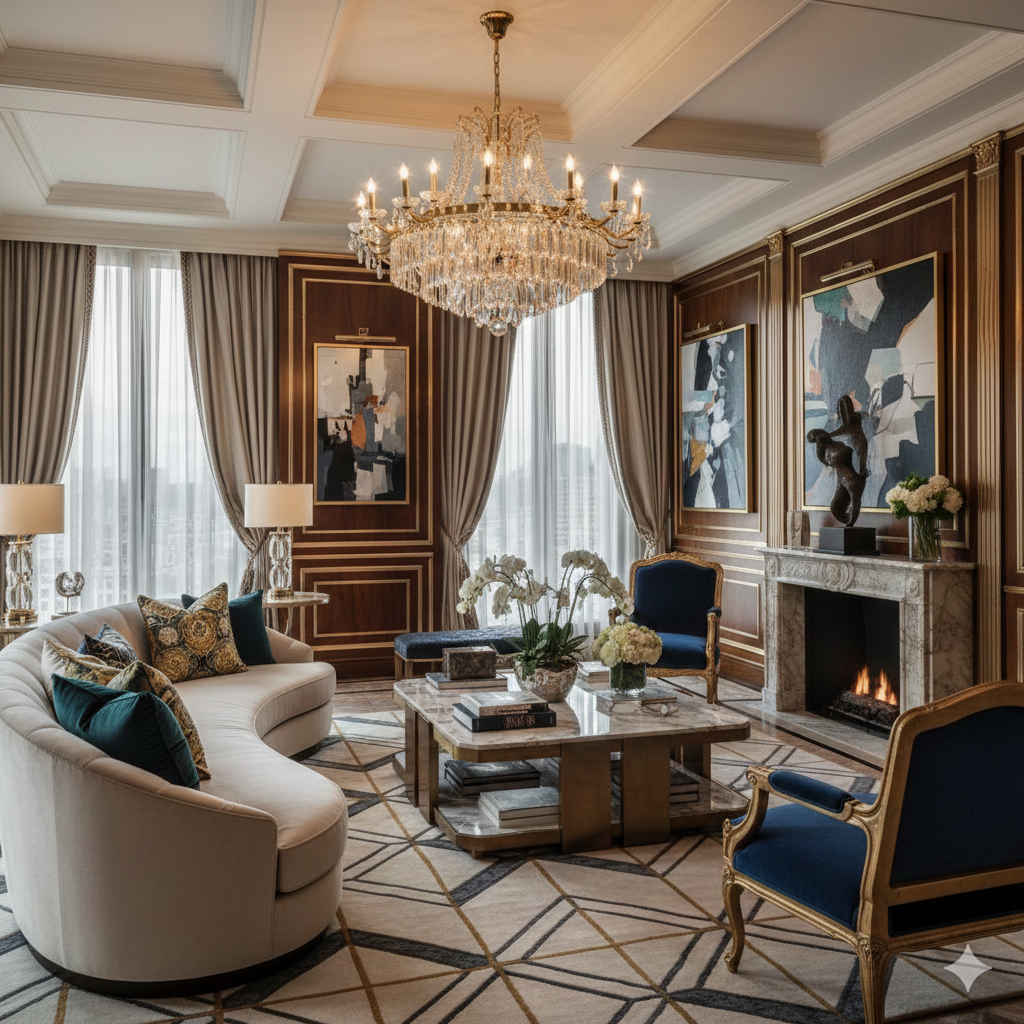
Luxury in interior design isn’t defined merely by price tags, designer labels, or square footage. True luxury is a feeling—a seamless blend of comfort, beauty, harmony, and emotional resonance. When someone steps into a high-end space, they sense something special long before they consciously understand why. That immediate emotional impact is where psychology and design meet.
In this article we explore the psychological principles that make interiors feel truly luxurious and how designers craft spaces that speak to both the senses and the soul.
1. Luxury Begins With Emotional Intention
Luxury interiors evoke specific emotions—serenity, confidence, comfort, exclusivity, or inspiration. Before selecting furnishings or finishes, expert designers identify the emotional tone a space should project.
Why this works psychologically: Humans experience environments through emotional cognition first and logic second. A home that feels calm, for example, reduces anxiety and creates a sense of refuge. A bold, curated space may evoke identity, status, and empowerment.
Luxury is the art of emotional curation.
2. The Power of Visual Harmony
One of the clearest psychological markers of luxury is cohesiveness. High-end spaces feel intentional because every piece relates to the whole.
- A consistent color palette
- Repetition of textures or shapes
- Balanced proportions
- Clean lines and thoughtful spacing
When the eye moves effortlessly through a room, it produces a calming neurological response. This is why clutter, imbalance, or mismatched décor can instantly make a space feel cheap—even if expensive items are present.
Luxury is visual ease.
3. Material Psychology: Why Touch Matters as Much as Sight
Humans are deeply tactile beings. The texture of a material can shift mood instantly.
Luxurious materials people respond strongly to:
- Velvet — comfort and richness
- Marble — strength and permanence
- Natural wood — warmth and grounding
- Cashmere — indulgence
- Polished metal — precision and modernity
Even when we’re not physically touching something, the brain associates certain textures with quality and care.
Luxury is multi-sensory.
4. Scale and Proportion: The Subconscious Language of Grandeur
High-end interiors often feel luxurious because proportions are exaggerated in calm, controlled ways. Examples include:
- Oversized artwork that signals importance
- Generously scaled sofas for lounging
- Tall drapery that elongates a room
- Wide walkways that feel effortless
Psychologically, ample spacing communicates freedom, abundance, and dignity—traits historically associated with luxury.
Luxury is breathing room.
5. Quiet Confidence: The Elegance of Understatement
Contrary to popular belief, true luxury rarely screams for attention. It whispers.
Minimalist luxury—clean lines, subdued colours, uncluttered spaces—creates a mental sense of order and clarity. Subtlety suggests refinement, not a need for validation; it allows craftsmanship to take center stage and creates timelessness.
Often the most luxurious details are sub-perceptual—hidden storage, perfect stitching, seamless hardware. These details evoke admiration before we can name why.
Luxury is sophistication without noise.
6. Personalisation: The Ultimate Psychological Marker of Luxury
Custom elements—bespoke furniture, tailored cabinetry, personalized layouts—signal thoughtfulness and exclusivity.
Psychologically, custom design triggers two key responses:
- Identity — “This is who I am.”
- Belonging — “This was made for me.”
Luxury is personal.
7. Lighting: The Silent Architect of Mood
Lighting profoundly affects emotion, yet many homeowners underestimate its power. Luxury interiors use layered lighting to craft mood and depth:
- Ambient, task, and accent layers
- Warm colour temperatures for comfort
- Dimmers for emotional modulation
- Architectural lighting to highlight textures and art
Well-crafted lighting creates depth, shadow play, and smooth transitions—similar to what you might experience in a high-end hotel or gallery.
Luxury is the control of light and shadow.
8. Scent, Sound, and Silence: The Psychology of Atmosphere
Beyond the visual, luxury is deeply tied to ambiance. Consider these often-overlooked cues:
- Soft acoustics or curated soundscapes
- High air quality and subtle signature scents (sandalwood, bergamot, amber)
- Quiet HVAC and high-quality insulation
- Soft-close drawers and smooth mechanical finishes
These subconscious sensory cues signal care, comfort, and exclusivity.
Luxury is atmosphere, not objects.
9. The Art of Curation: Fewer, Better Things
Luxury interiors don’t overwhelm. They curate. A high-end space typically contains fewer, more meaningful objects—one striking piece of art, a small collection of well-chosen accessories, bespoke pieces over mass-produced alternatives.
Reducing visual noise improves cognitive clarity and produces a feeling of understated sophistication.
Luxury is intention, not quantity.
10. Storytelling: What Makes a Space Feel Alive
The most luxurious spaces feel alive because they tell a story—of heritage, craft, travel, values, or personal history. Designers achieve narrative through:
- Art collections and sculptural forms
- Culturally resonant or vintage pieces
- Heirloom-quality furniture and meaningful objects
We are psychologically drawn to stories because they provide emotional context. A room with a narrative feels deeper, richer, and more memorable.
Luxury is meaning.
What makes a space truly high-end isn’t a single design choice—it’s the sum of emotions, sensory cues, and harmonious elements that work together to create an elevated experience. Luxury is a feeling first, a style second.
